Mental Health

Anxiety

Anxiety often manifests as feelings of worry and nervousness.  In the body, it can manifest as a racing heart, tight chest, shallow breathing, muscle tension, nausea, dizziness, or difficulty sleeping.

This page offers basic information about anxiety, as well as links to more detailed information about coping strategies and other resources.  Disclaimer: 3rd party videos for educational purposes only. May contain ads. See their website for their privacy policies.

It's Physical, Too

While most people think of anxiety as “mental” or “psychological,” it is important to keep in mind that it is also a physiological phenomenon. The symptoms arise from the body’s response to a perceived threat or danger – something that is commonly referred to as the “fight-or-flight response.”  (Note: Fighting and fleeing are actually just two of several responses. They aren’t all listed here so that this text isn’t so long.)

In small doses, anxiety can be helpful – if still unpleasant – because it can motivate a person to think through situations, prepare for difficulties, and minimize risks. For example, it can motivate someone who is anxious about an upcoming interview to plan what they will wear and practice answering expected questions so that they appear prepared.

What Anxiety Can Feel Like

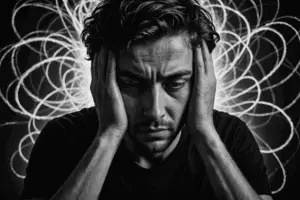
Close-up of man with head in hands looking stressed.. Bright lines representing anxious thoughts surround his head.Anxiety can show up in many different ways and vary over time and situations. ves thoughts about bad things happening in the future.  It is frequently experienced in anticipation of challenging situations and uncertainty.

You may experience an ongoing sense of unease or worry. You may be hit by sudden waves of panic or dread that seem to come out of nowhere.

Your thoughts may loop over and over again about potential problems or worst-case scenarios. It may be difficult to concentrate. Everyday decisions may take more effort than usual. You might feel restless, keyed up, irritable, or constantly “on edge,” or you may feel emotionally numb or disconnected as your system tries to manage ongoing stress.

Anxiety can also influence behavior. You may find yourself avoiding certain situations, people, or tasks that feel overwhelming, or spending a lot of energy preparing, checking, or seeking reassurance. Over time, these patterns can affect work, relationships, health, and overall quality of life—even when you are doing your best to cope.

When Anxiety Becomes a Problem

Anxiety becomes more concerning when it starts to interfere with daily life rather than helping you respond to challenges.

While some level of anxiety can be protective or motivating, ongoing or intense anxiety can make it harder to function, rest, or feel present. You may notice that worry or fear takes up a significant amount of mental energy, leaving you exhausted or distracted much of the time.

Anxiety may be a problem when it consistently disrupts sleep, concentration, or decision-making, or when it leads you to avoid situations, responsibilities, or relationships that matter to you. Physical symptoms—such as persistent tension, headaches, gastrointestinal distress, or fatigue—may become more frequent or harder to manage. Over time, anxiety can narrow your world, limiting what feels possible or safe.

It can also become problematic when anxiety no longer seems connected to the current situation, or when your reactions feel stronger or longer-lasting than you would expect. You might recognize that your body stays on high alert even when you know you are not in immediate danger, or that reassurance and preparation do not bring lasting relief.

Needing support for anxiety does not mean something is “wrong” with you. It often reflects a nervous system that has been under sustained pressure and is having difficulty returning to a state of balance. When a person experiences anxiety to the point where it is interfering with their wellbeing, work, relationships, or overall quality of life, they may be experiencing an anxiety disorder.

Stress, Worry, & Anxiety

Learn the difference between them.

Getting the Upper Hand on Anxiety

There are a variety of tools to manage anxiety and symptoms associated with it.  These include:

  • Practices designed to calm the nervous system
  • Cognitive coping skills
  • Psychotherapy
  • Medication

Often, they are most helpful in combination. For example, a psychotherapist can provide emotional support and teach specific coping skills and calming techniques. 

Learn More

Scroll to Top